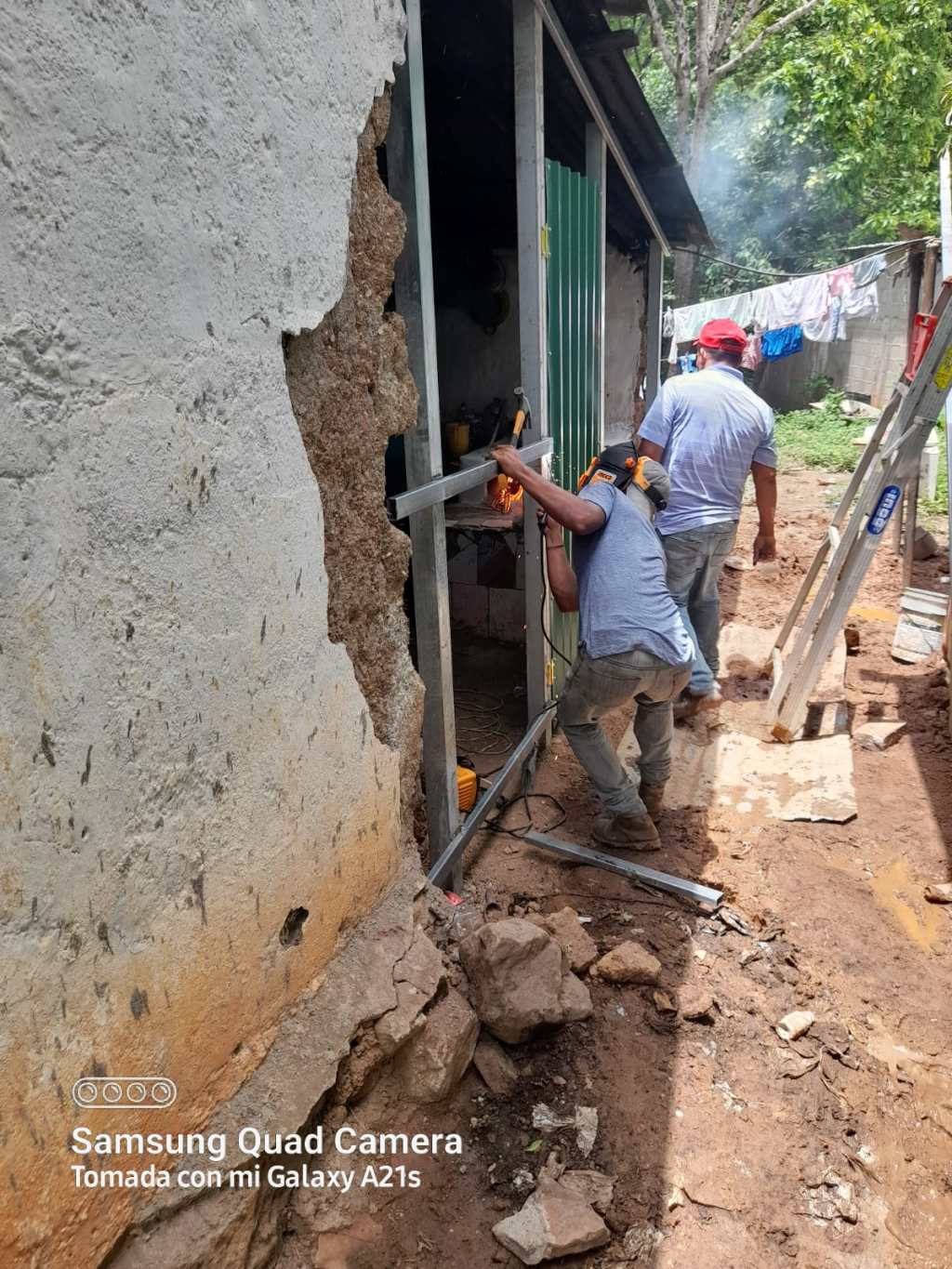
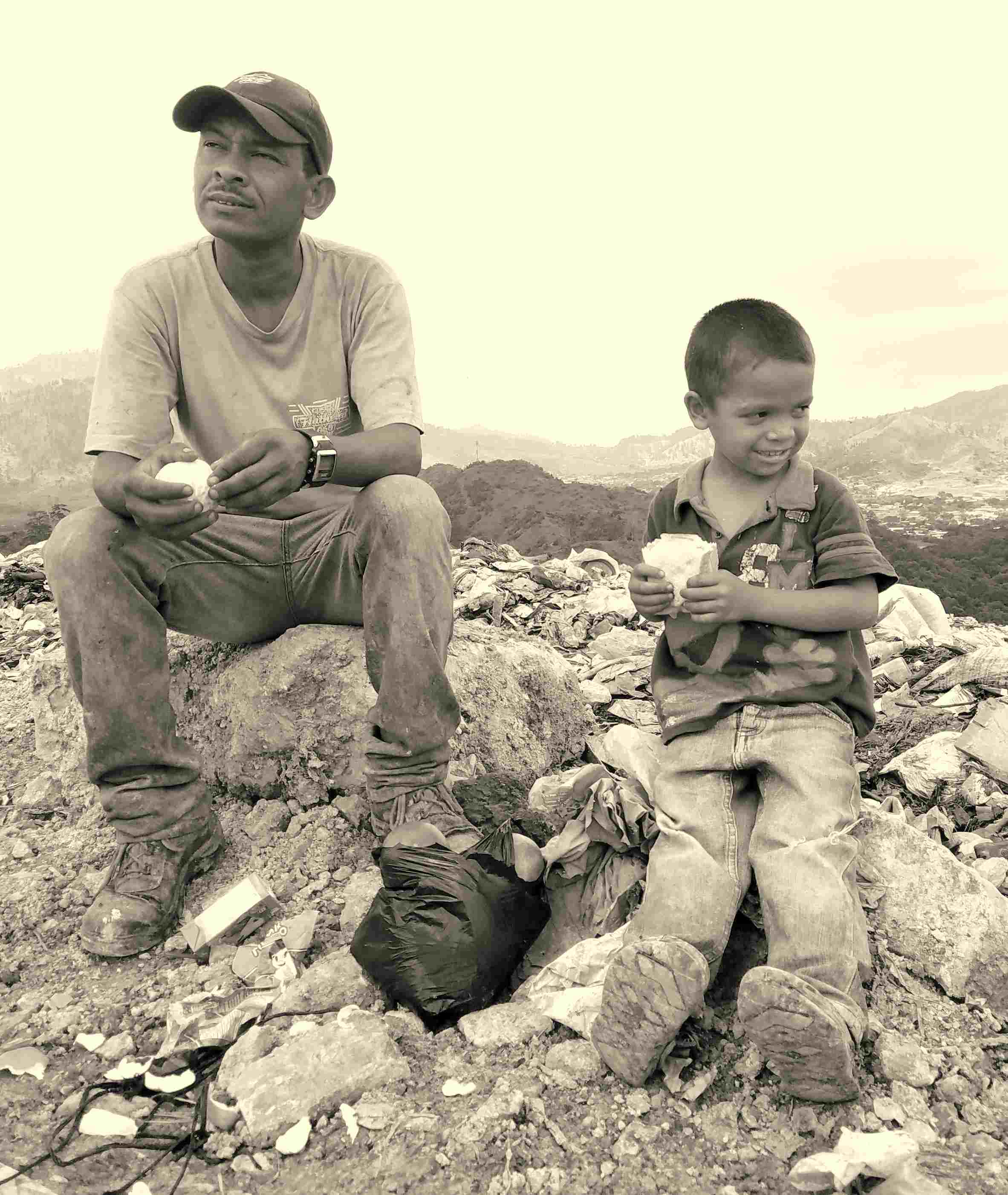
| Six weeks ago, I received a message that the landfill at the Carbonera community—the community where we have been serving—had been closed. For years we had heard rumors that this might happen. The landfill sits on privately owned land rather than government property, and there had been ongoing difficulties negotiating the lease. We still do not know exactly why it finally closed, but this time the rumors became reality. When José and I first drove into Carbonera, we stopped and spoke with two different groups of people. Both groups asked us the same question: “Are you leaving us now?” We assured them that we were not. Our work in Carbonera will continue. For people who have been overlooked by so many outside their community, it clearly meant a great deal to know that we—and you, through your prayers and support—were not abandoning them. The closure of the landfill, however, has brought significant changes. We have learned that 21 men from Carbonera are now working at the new landfill. While that is encouraging, many other families depended on the old landfill as a source of income. For some, when work was scarce or they needed extra money, they could spend a day recycling there. That opportunity has now disappeared. We also don’t know how the closure has affected the other nearby communities that once depended on the old landfill, but we suspect it is significant. The constant stream of trucks traveling up and down the narrow road to and from the old landfill has been replaced by an quiet. It feels almost eerie. Not long ago, the community was filled with activity from early morning until evening. Even the flies reflect the change. With the old landfill no longer receiving fresh trash, they appear to be running out of food. In greater numbers, they have descended on the homes in the community. I originally thought this update would simply be about the impact on Carbonera. That changed last Thursday. Last Thursday, José, Donovan, Donovan’s son, and I visited the new landfill, which is about four and a half miles from the old one. The 21 men from Carbonera who now work there must find transportation each day. Some own motorcycles and ride together, while others depend on rides from friends or anyone willing to help. As we drove down the rough road leading to the landfill, José remarked that the area reminded him of videos he had seen of rural Africa. Although Carbonera is poor, this neighboring community was on a different level. I don’t remember seeing a single painted house. Almost all were built from old pieces of discarded wood and/ rusted corrugated metal that families had salvaged. Every home was small and bore the marks of extreme poverty. Imagine the poorest house you have ever seen, then imagine something even more desperate—that is what many of these homes looked like. The families living there are squatters because the land belongs to the government. Since the new landfill has been built on that property, some of them will soon have to relocate. We were told the government has promised to provide building materials so they can build new homes elsewhere. I sincerely hope that promise is kept, but only time will tell. The city limits the number of adults who are permitted to enter the landfill to recycle. Even so, we saw children collecting recyclable materials as well. There are two organized groups working there—one from Carbonera and another from this neighboring community—and they divide the recycling income equally within their group. When we spoke with one young boy who was recycling, however, he told us he was working on his own. There is no school in this community. We did not spend enough time there to learn all the details, but we learned that one woman takes children to a school in a different community. Most of the children we saw, however, did not appear to be attending school. Water is available from a spring on a nearby mountain. Each family is apparently responsible for getting water to their own home. Those who could afford to buy a hose have run water from the spring to their houses. Those who could not must borrow water from their neighbors. As I looked around, it seemed that a relatively simple water system could provide clean water to the entire community. We’ll go back to the community soon to learn more. After leaving, José and I drove back to Carbonera. It was remarkable how much our perspective had changed. The community where we have been serving suddenly looked almost prosperous by comparison. Seeing even greater poverty has a way of changing how you view what you once thought was extreme poverty. We left that visit with mixed emotions. Our hearts remain with the families in Carbonera as they continue to live in difficult circumstances and now adjust to the closure of the landfill, but we also cannot stop thinking about this neighboring community whose needs are even greater. Their poverty is overwhelming, and they are largely unseen. Sometimes the Lord broadens our vision in unexpected ways. We went to better understand how one community was being affected, but He also allowed us to see another community struggling simply to survive. Perhaps He is asking us to expand the work He has entrusted to us. We don’t know yet, but we are praying and listening. Meanwhile, our work in Carbonera continues. When we entered the community this past week, a woman stopped us and showed us her house. One of the adobe (mud) walls in her kitchen had collapsed, leaving a large opening. Her husband died several years ago from diabetes, and her son later passed away after what the family believes was a medical error at the public hospital (I have learned this is not an uncommon problem within the public hospital system here). Now she and her daughter had no way to repair the house themselves. Five men from the community who are working with us repaired her home last week. Our next projects are to build a simple shelter where we gather for prayer, constructing a small home for a homeless man in the community and to install the electrical for the new medical/dental clinic. And of course, there are the opportunities to visit people in their homes, listen to stories and pray together. We are deeply grateful for our partnership with Donovan and his team as we together continue sharing Jesus with the people of Carbonera. It would be wonderful if Jesus simply rained down new cars, jobs, and houses on this community. But He offers something even more enduring—Himself. The One who knew poverty, hunger, rejection, humiliation, betrayal by a friend, and an early death promises, “I will never leave you nor forsake you.” That promise is an anchor for the soul, regardless of how difficult our circumstances become. Please continue to pray for both communities—that families would find stable family sustaining work, children would have opportunities for education, clean water would become available, and, above all, that many would come to know the hope found in Jesus. In the end, this is His work. We simply have the privilege of working for Him. He is the Boss. |
The work continues