This is a newsletter from our friends and fellow laborers Donovan and Chelsey Ortega. We appreciate their desire to work together to advance the kingdom of our God and King. They are part of the ministry World Resources Group, https://wrghonduras.org/
When we add posts to this website, the website suggests tags for posts. One of the suggested tags for this post was “Fiction”, apparently the AI driving the suggested tags thought this story was too outlandish to be real, but a fictional story. I can assure you, what you are about to read really happened, and is happening not only here but in many other trash dumps around the world. This is the reality millions of people face daily.
************************************************************************
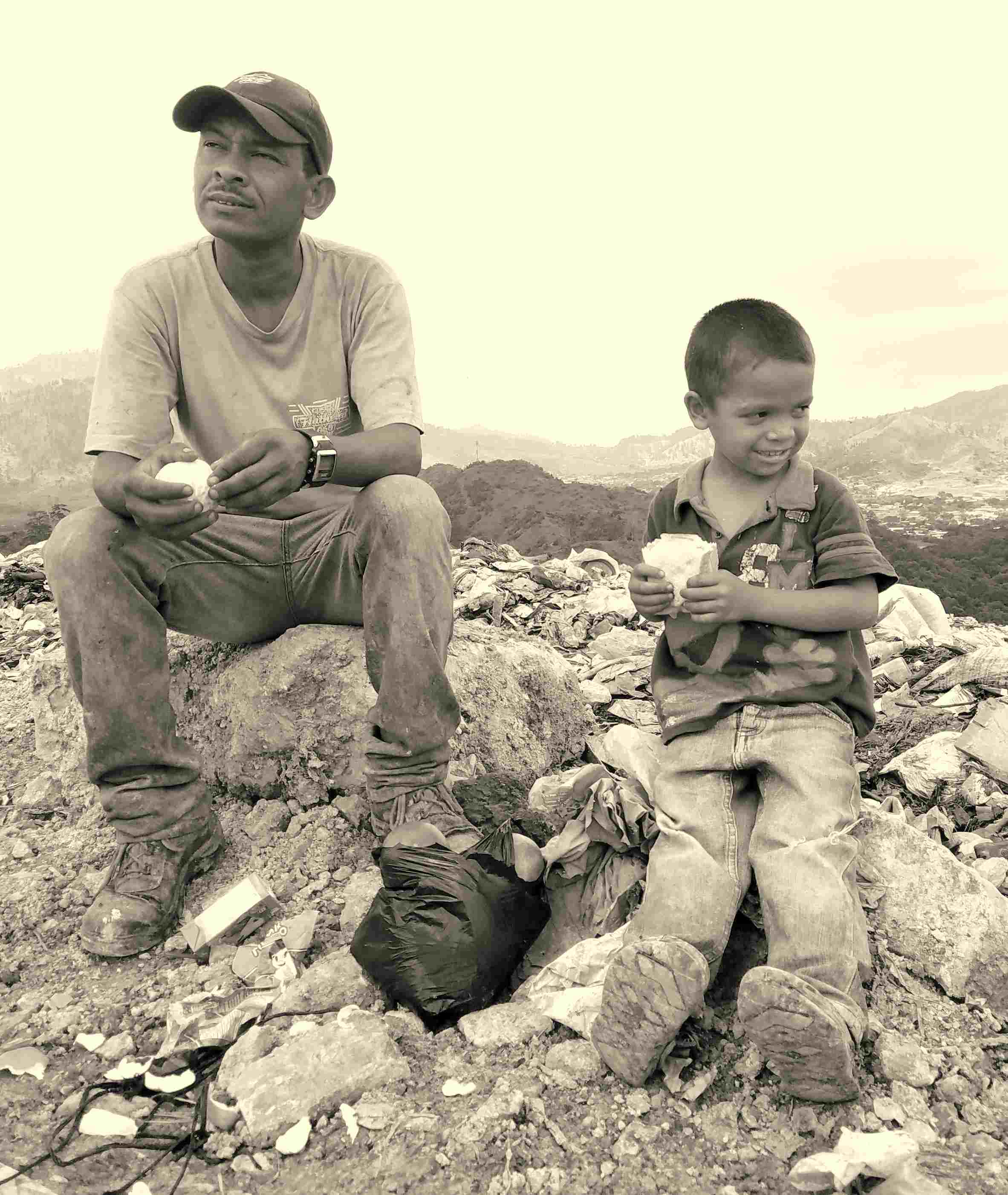
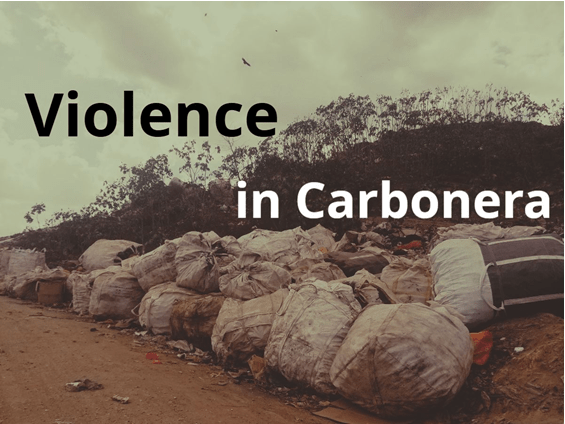
The trash trucks start coming up the mountain at dawn, and the men of Carbonera, the recyclers, wait at the summit. They hear them first: the diesel engines straining and clawing up the muddy, trash-strewn incline. Then the garbage bags stacked high in the truck beds rise into view like ship sails over a horizon, followed by the massive fronts of the trucks themselves, black smoke ripping out of the exhaust pipes and into the sky.
The recycling environment is competitive, so as the trucks get closer the recyclers begin to jockey for position. When the men on the trucks heave bags off the sides and they slap the ground, the recyclers pounce. They never know what is inside a bag until it is opened, so they rip them apart with their hands. The smell is predictably horrible. Trash pickup only comes once a week, so the garbage arrives rotted and maggot filled. The recyclers fish through this indescribable mess to find plastic and glass, sometimes a toy for their children.
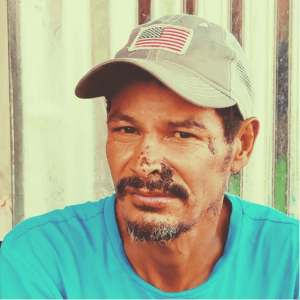
“We are used to it, but it’s not like we don’t see it and smell it,” said Lupe to me one morning while I was driving him to the courthouse. We were on the way to lodge a criminal complaint against a man who, unprovoked according to Lupe, stabbed him in the face while he was collecting bottles. The cut began at the bottom of his nose and traveled through to the top of his lip. A ragged slice. It looked like it was healing well, though it was hard to be sure because of the large scab that had formed over the top of the sutures. Violence in Carbonera is common, particularly among recyclers.
Ronny, a friend of ours, was severely stabbed by a recycler just a few weeks before Lupe. He told me the dump has gotten more intense lately because, for reasons no one understands, there’s less trash. Plastic and glass are more scarce. There was some physical contact and words exchanged between him and another man. A dispute over cans or empty milk jugs. A few minutes later Ronny was attacked. He received deep stab wounds to his arm, chest, and back, along with a particularly nasty cut in his buttocks.
“I thought I was going to die I lost so much blood,” Ronny said. “Mirna [his wife] was with me in the truck, and she was praying. I was praying, too. I think I was. I don’t know. I couldn’t think.”
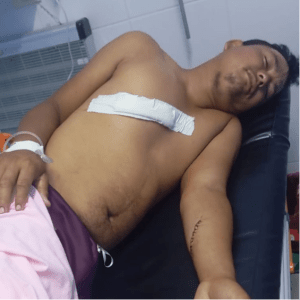
Miraculously, Ronny lived. He can’t work right now, and suffered nerve damage in his fingers and hand, but seems to be recovering. While I was visiting, I asked him about the man that attacked him: “Who was he?”
“He’s my cousin,” Ronny told me.
It seems like almost everyone in Carbonera is related, so it didn’t surprise me.
“Well, what’s going to happen to him?” I asked.
“The police are looking for him, but he’s run into the mountains” said Ronny gesturing to the hills beyond his home. “But I don’t hold anything against him.”
Ronny’s lack of anger surprised me, and Digna—his aunt—attacked it immediately.
“No, no,” she said, shaking her head. “He has to pay. He can run all he wants, but he has to pay for what he’s done. The police might not find him, but he has to pay.”
Digna is a soft-spoken mother of three, so her sudden intensity, especially next to Ronny’s calm, was striking. I nodded at Digna, then to Ronny I said, “Digna wants to kill this guy herself.”
Ronny laughed; Digna was embarrassed. She does not have the personality of a killer. But then she said this: “It’s just not fair. It’s not fair that he can do something like that and get away with it. It’s not fair.”
 |
| Trash in front of Digna’s home. |
Justice feels distant in a place like Carbonera, and I am not talking about all the unsolved crimes. I am talking about the daily indignities of living in a dumping ground. The same day I visited Ronny, heavy rain had made the steep incline to the dump impassable to the trucks, so they dumped the bags all along the side of the road haphazardly and left. Much of this trash was medical waste from the hospital, so blood and tissue mixed with rainwater ran into the streets and directly into homes.
We’ve worked in the trash dump for over a year and grown used to it, but walking up to Digna and Maria’s house that day, I felt a new kind of rage. I was disgusted, not by the trash dumped in front of their homes, but by the absurdity of it all. It made me want to cry.
 |
| Recyclers took the road in protest of the dumped trash. The trash was cleared later that day. |
Work in poverty long enough and you will soon realize there is always something else coming. Each disaster is simply heaped upon the absurdity of human error and run of the mill violence. Tragedy begets tragedy in Carbonera.
The team was recently at Maria and Digna’s home when the ambulance came for Mirna [Ronny’s wife]. She’d been sick, then suddenly couldn’t walk. It sounded serious, but the doctors told her she just needed to exercise or, as Digna put it, “her bones would shrink.” Medical care in Honduras is its own story, but Mirna is getting better, little by little.
“This family [Maria, Digna, Ronny, Lupe, Mirna] is very special,” Skarleth told me. “When we visit they receive us beautifully, and they are always eager to pray.”
And the team is eager to pray with them. I’m always struck by the spirit with which the team enters Carbonera. They sense that something important is happening here, something that requires our presence despite the difficult problems. Everyone is spiritually energized by the task.
“Jesus loves Carbonera, and he wants us to be here,” Skarleth assured me. “It’s obvious.”
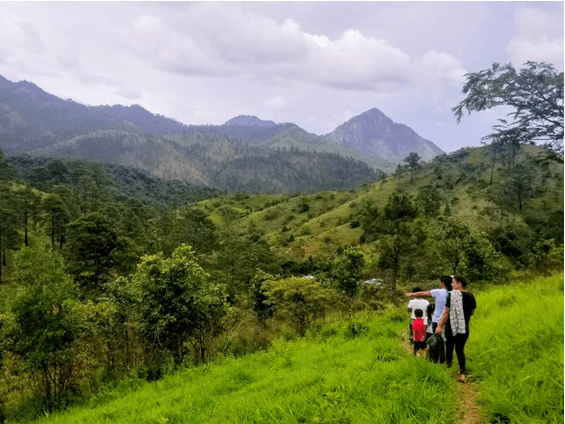
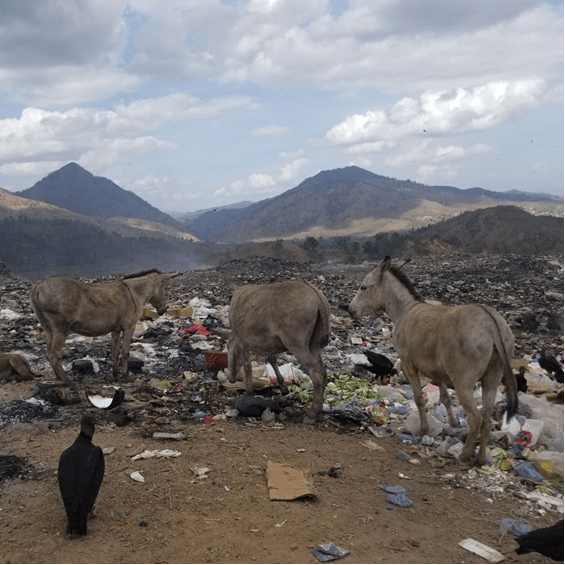
From the top of trash mountain, Danlí looks beautiful. At night the city lights twinkle like stars, and on rainy mornings mist drifts across the green peaks. Honduras is beautiful from a distance. It’s when you get up close that it’s ugly. Turnaround from that pretty vista and you’ll be face to face with a troop of sad donkeys eating trash. A donkey is a humble animal. But seeing one in the trash dump, standing in the refuse of our civilization, makes Jesus riding one into Jerusalem feel even more absurd.
But we know he rode one triumphantly on that Sunday long ago, just as surely as he’s riding one into Carbonera right now. This land, scarred and broken, is his, and he died for its people. He will not abandon them.
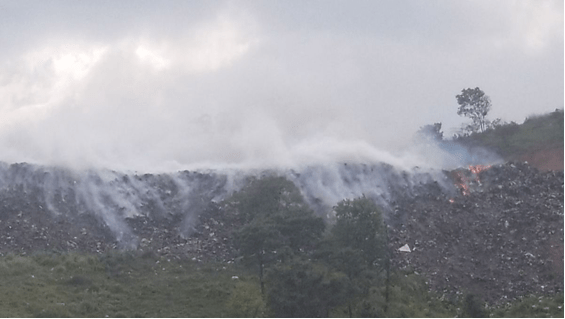
Every day in Carbonera, the trash is burned and smoke pours off the mountaintop like prayers. The cloud can be seen for miles and miles.
World Resources Group · 456 Myers Ave · Harrisonburg, VA 22801 · USA
 Danli Honduras Trash Dump Community